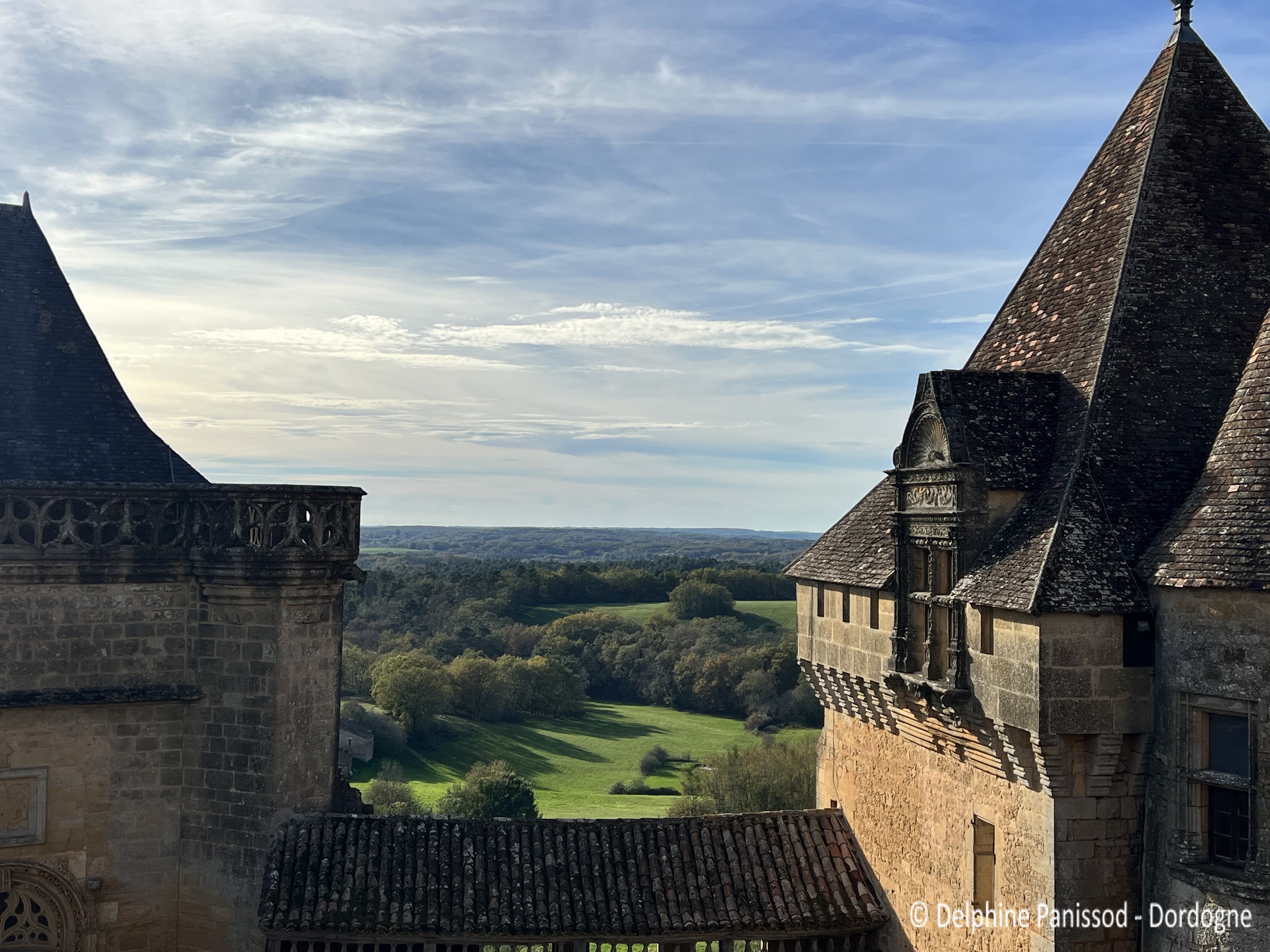
Château de Biron: Exploring a Stone Giant in the Dordogne
Some châteaux appear suddenly as you turn a corner on a country road. Others can be spotted from miles away, rising proudly above the landscape and immediately making you wonder what lies behind their ancient walls.
Château de Biron definitely belongs to the second category.
I visited it last autumn, on one of those beautiful days when the soft seasonal light gives the golden stone of the Périgord an even warmer glow. And at Biron, the experience begins long before you actually walk through the gates.
A château overlooking the Périgord countryside
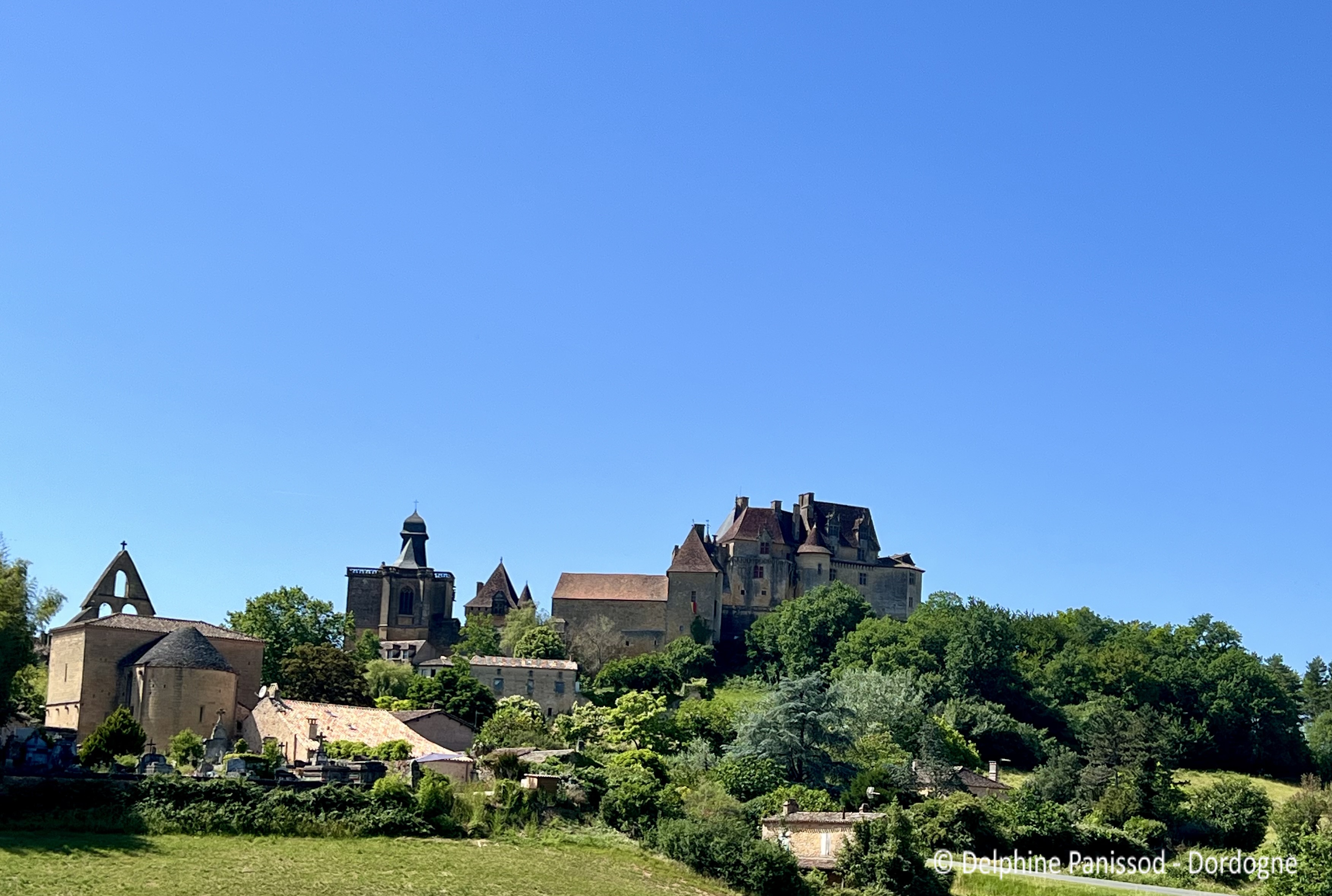
Château de Biron overlooking the village and the rolling Dordogne countryside – © Delphine Panissod
Located in the south of the Dordogne, close to the border between the Périgord and the Agenais and just a few kilometres from Monpazier, Biron enjoys a spectacular position.
The château dominates the surrounding hills, woodland and countryside. When you first see it from a distance, it is easy to understand why such a strategic location was chosen.
Biron was once the seat of one of the four baronies of the Périgord, and its history is closely linked to the powerful Gontaut-Biron family, who held the estate for around eight centuries.
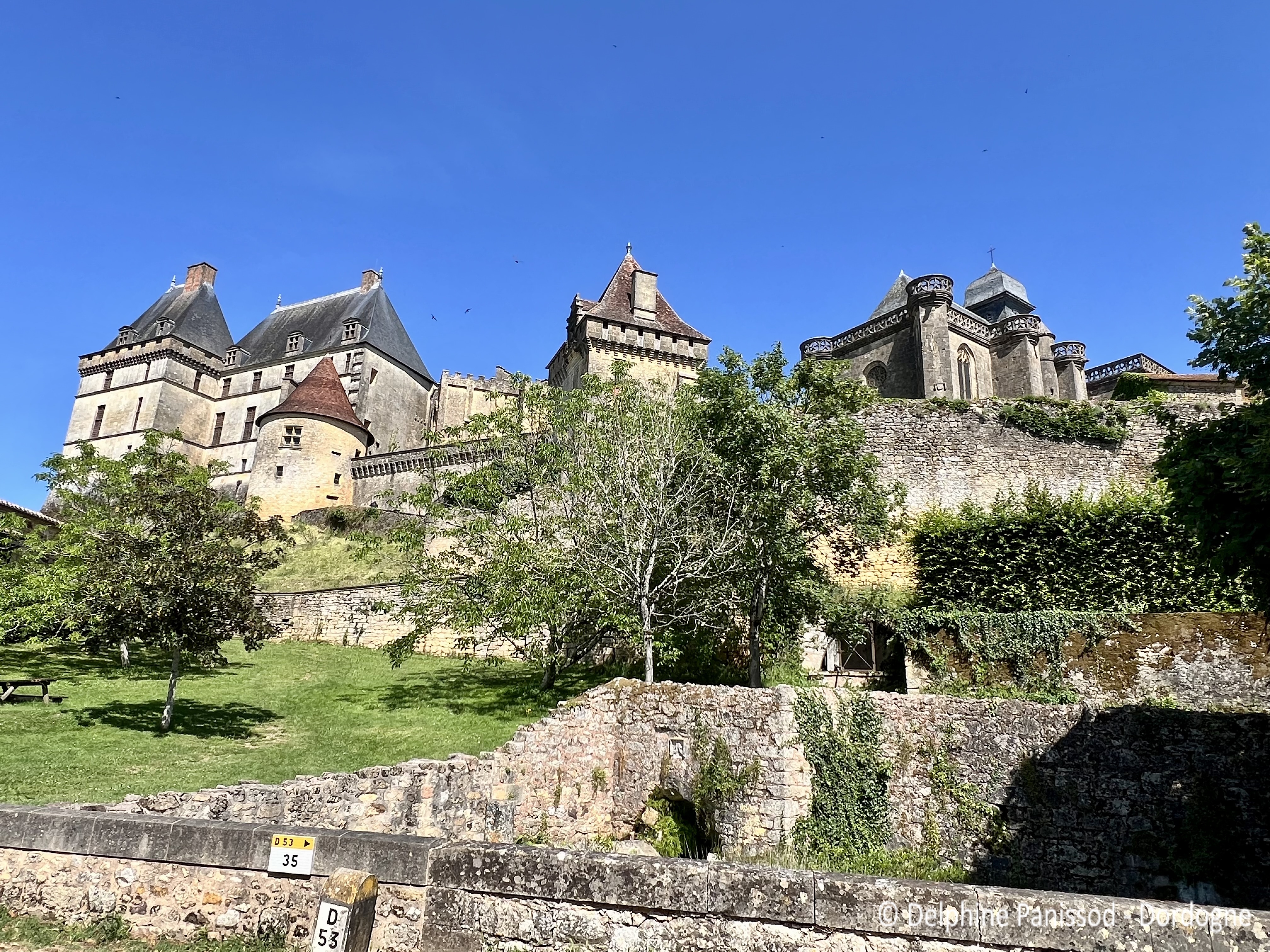
Perched above the Périgord: the impressive silhouette of Château de Biron – © Delphine Panissod
One château… or several châteaux in one?
This is probably what struck me most during my visit.
Biron isn't a château built during one particular period and left unchanged ever since. It evolved, expanded and reinvented itself over several centuries.
From the Middle Ages to the 18th century, successive generations left their mark. As you explore the site, you move from medieval defensive architecture to Renaissance elegance and later, more comfortable residential spaces.
A 12th-century keep, a two-level Gothic chapel, Renaissance apartments, reception rooms, a huge vaulted kitchen and the impressive Salle des États… the combination of architectural styles gives Biron a fascinating personality.
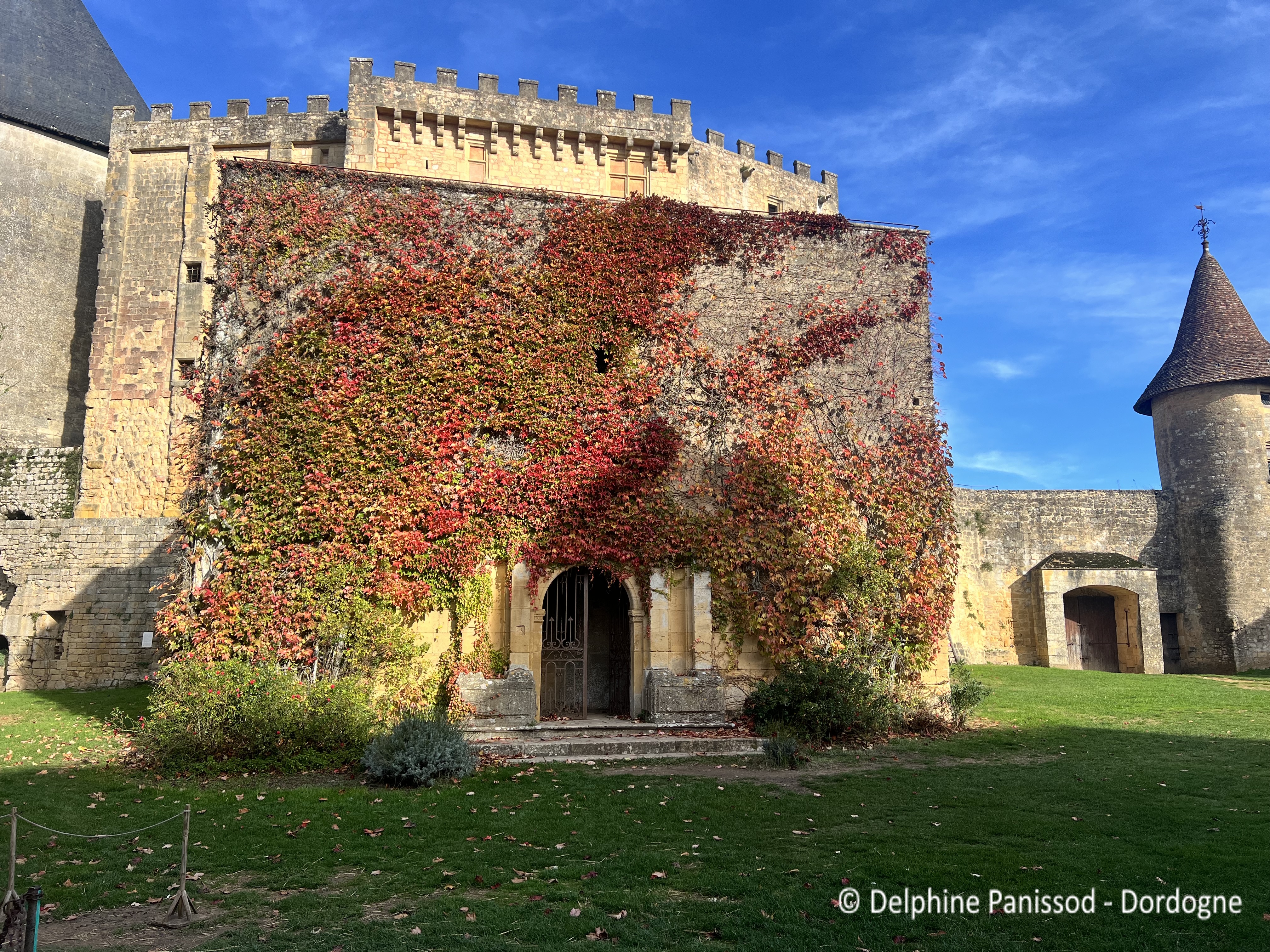
Golden stone and autumn colours in the courtyard of Château de Biron – © Delphine Panissod
And I have to admit that autumn makes the whole place even more photogenic.
The Virginia creeper covering part of the walls turns brilliant shades of red and orange, contrasting beautifully with the warm stone and blue sky.
It doesn't get much more Périgord than this!
Architectural details everywhere you look
One of the things I love about visiting historic buildings is taking the time to notice the details.
And at Biron, you really need to look up, turn around, peek through a doorway or stop for a moment in one of the galleries.
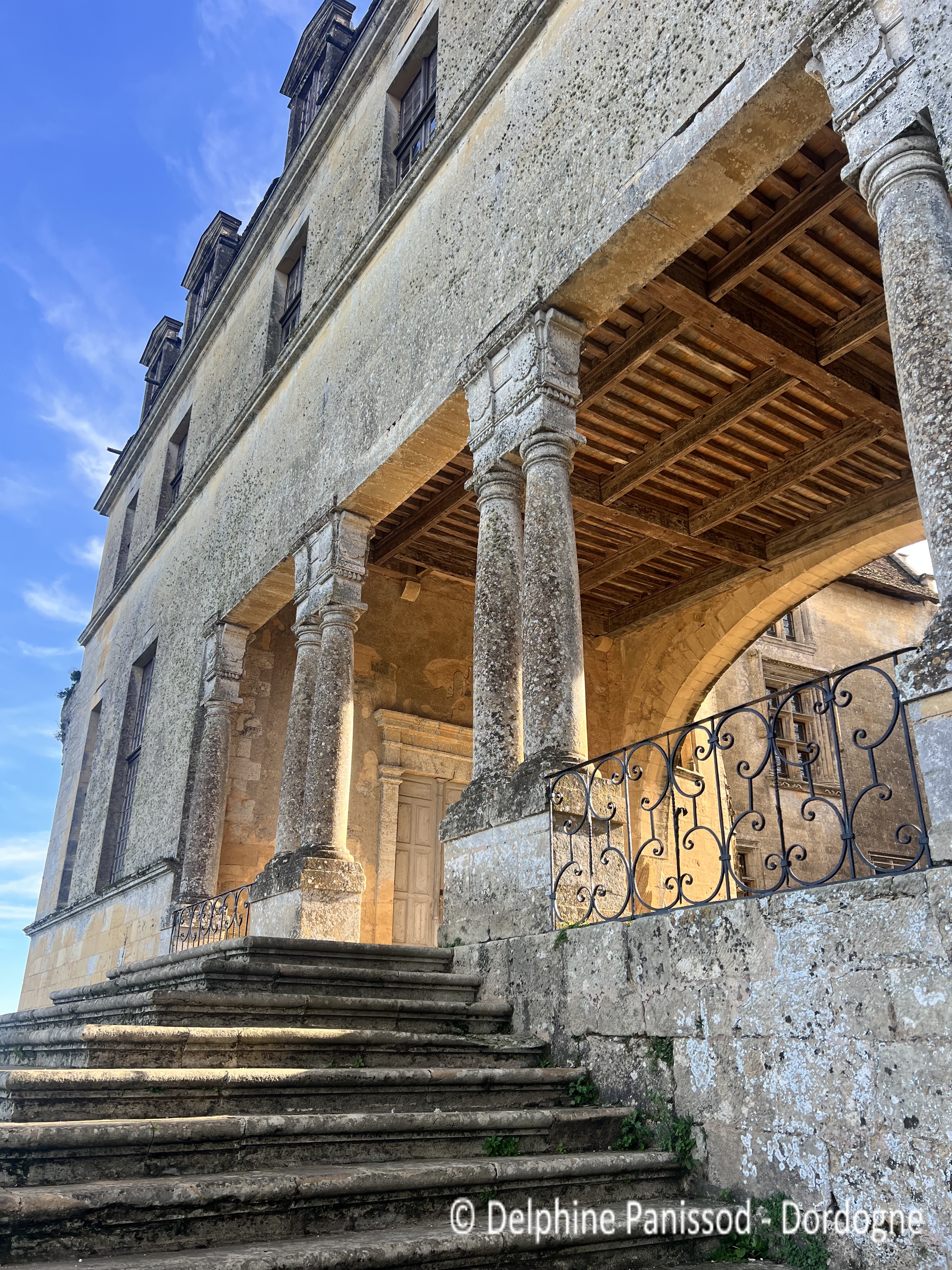
Monumental staircase and Renaissance architecture at Château de Biron – © Delphine Panissod
Staircases, columns, open galleries, roofs, fireplaces and courtyards all reveal different chapters in the château's long history.
Its military past is still very much present, but it gradually gives way to a more elegant style of architecture designed for comfort, entertaining and prestige.
That's one of the reasons the visit is so enjoyable: rather than simply walking through a succession of similar rooms, you are effectively travelling through several centuries of French history.
A gallery that makes you slow down
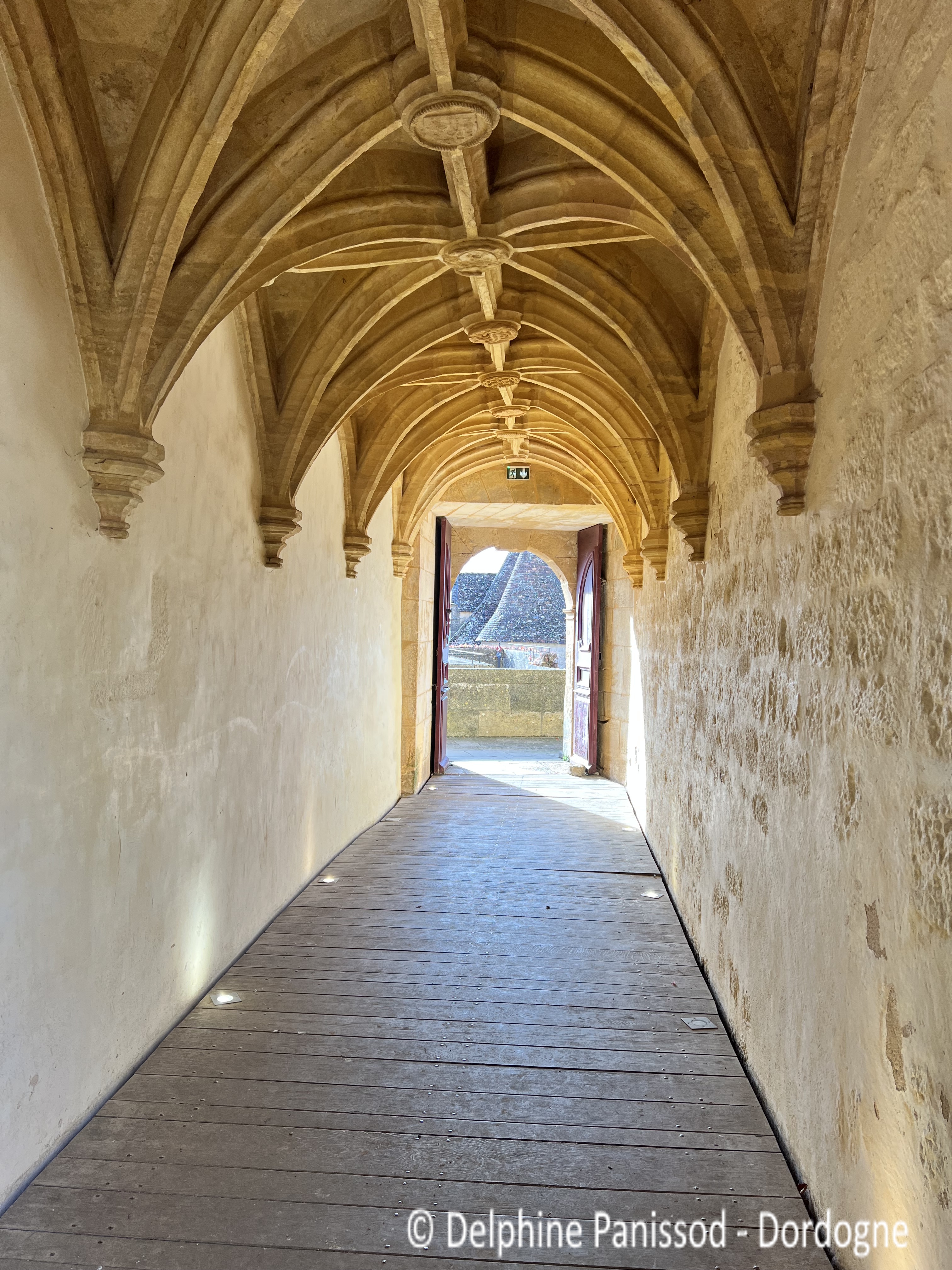
Light and Gothic vaults inside Château de Biron – © Delphine Panissod
I particularly loved this long vaulted passageway.
The rhythm of the stone ribs, the light entering from the far end and the open doorway leading outside create one of those places where you naturally stop for a moment and simply look around.
The official visitor route leads through this pointed-vault gallery towards the grand 17th-century staircase and the seigneurial chapel.
An extraordinary chapel
The chapel is one of the château's architectural highlights.
Built between 1498 and 1504 in the Flamboyant Gothic style, it has the unusual feature of being arranged over two levels, with a design inspired by the Sainte-Chapelle in Paris.
Its history also contains a rather unexpected twist.
Two remarkable groups of sculptures originally housed at Biron – a Pietà and an Entombment of Christ – were sold in 1908 by the last Marquis de Biron. Today, they can be found thousands of miles away at the Metropolitan Museum of Art in New York. Facsimiles are gradually helping to recreate their original presence within the château.
Yet another of those unexpected connections between the Dordogne and the other side of the world that I love discovering during my visits!
And then… the view
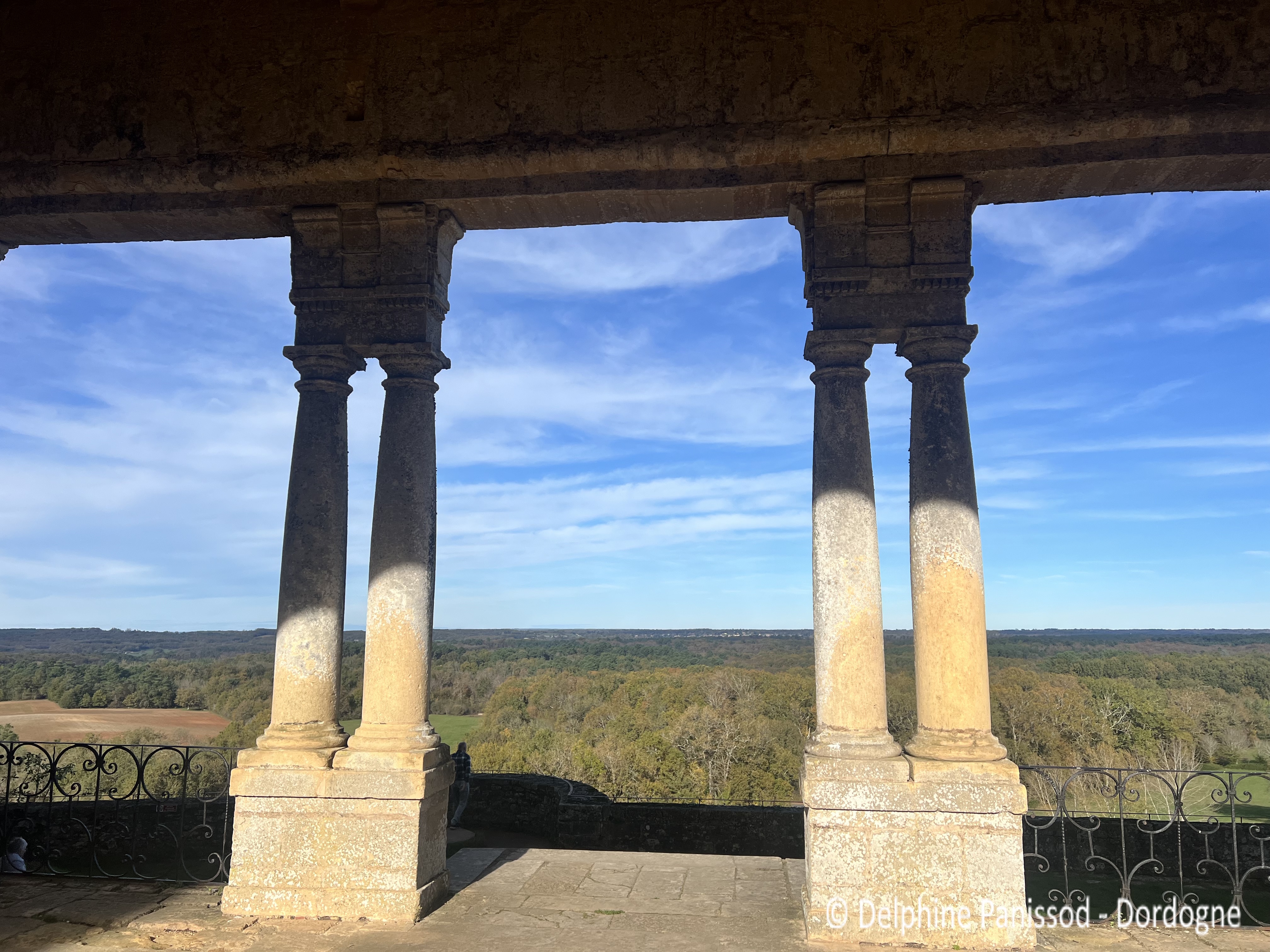
From the heights of Château de Biron, the view stretches for miles across the Dordogne countryside – © Delphine Panissod
Then there are the views.
And here, I think the photographs speak better than I can.
From the château, you look out over an immense landscape of woodland, fields and gently rolling countryside. From some of the terraces and galleries, the views seem to stretch almost endlessly towards the horizon.
Standing here also makes Biron's strategic importance very easy to understand. Centuries ago, these heights offered commanding views over a vast territory.
Today, thankfully, we can simply enjoy the scenery!
Architecture in conversation with the landscape
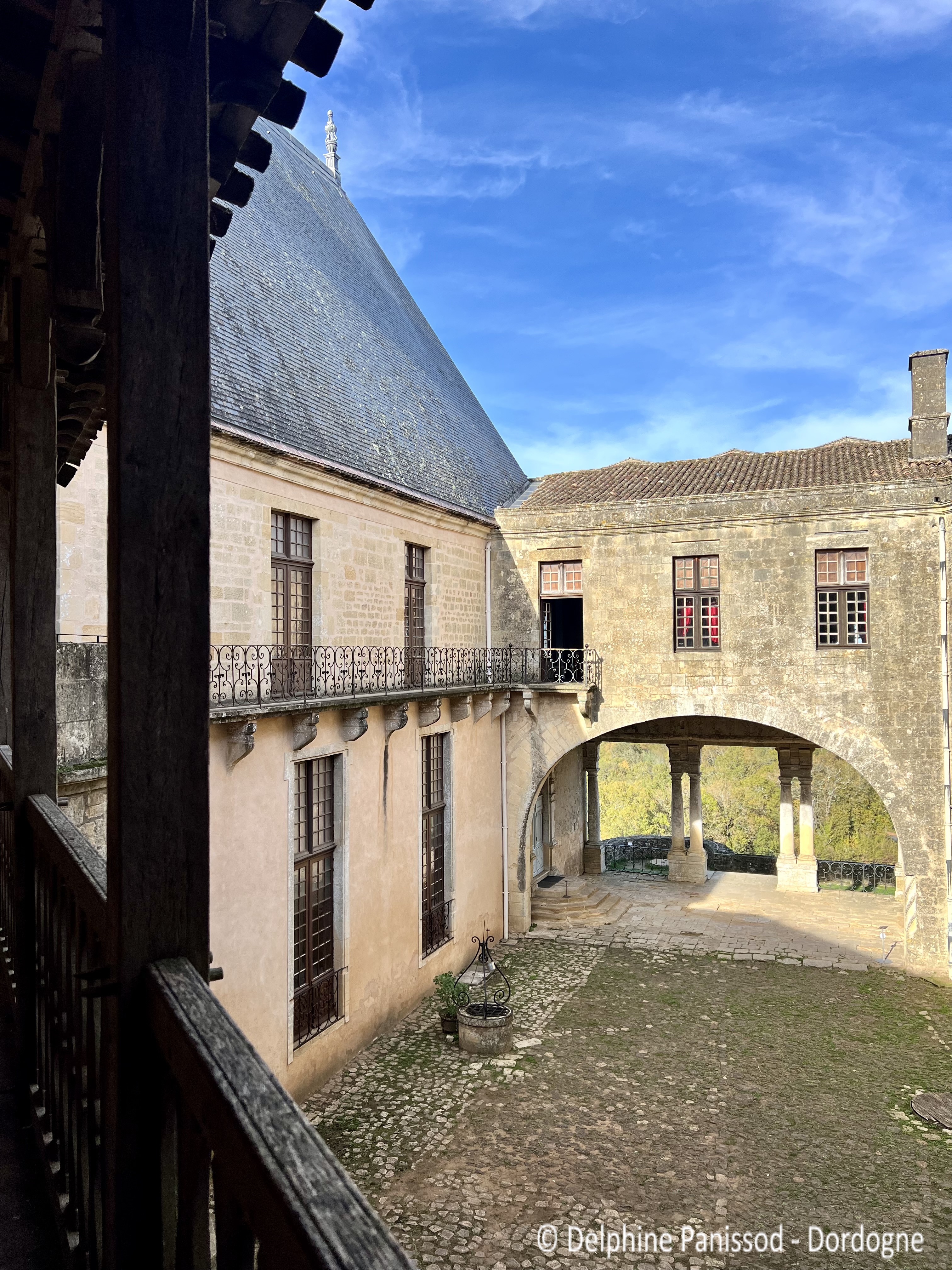
Historic architecture opening onto the surrounding countryside at Château de Biron – © Delphine Panissod
I particularly enjoyed the feeling of constantly moving between indoors and outdoors.
You walk through a room, cross a gallery or enter a courtyard… and suddenly an opening frames the countryside like a painting.
It's one of the things I love most about the architectural heritage of the Périgord: the buildings and their surroundings are rarely separate from one another.
The stone tells one story, while the landscape tells another.
Biron, Monpazier and a part of the Dordogne I particularly love
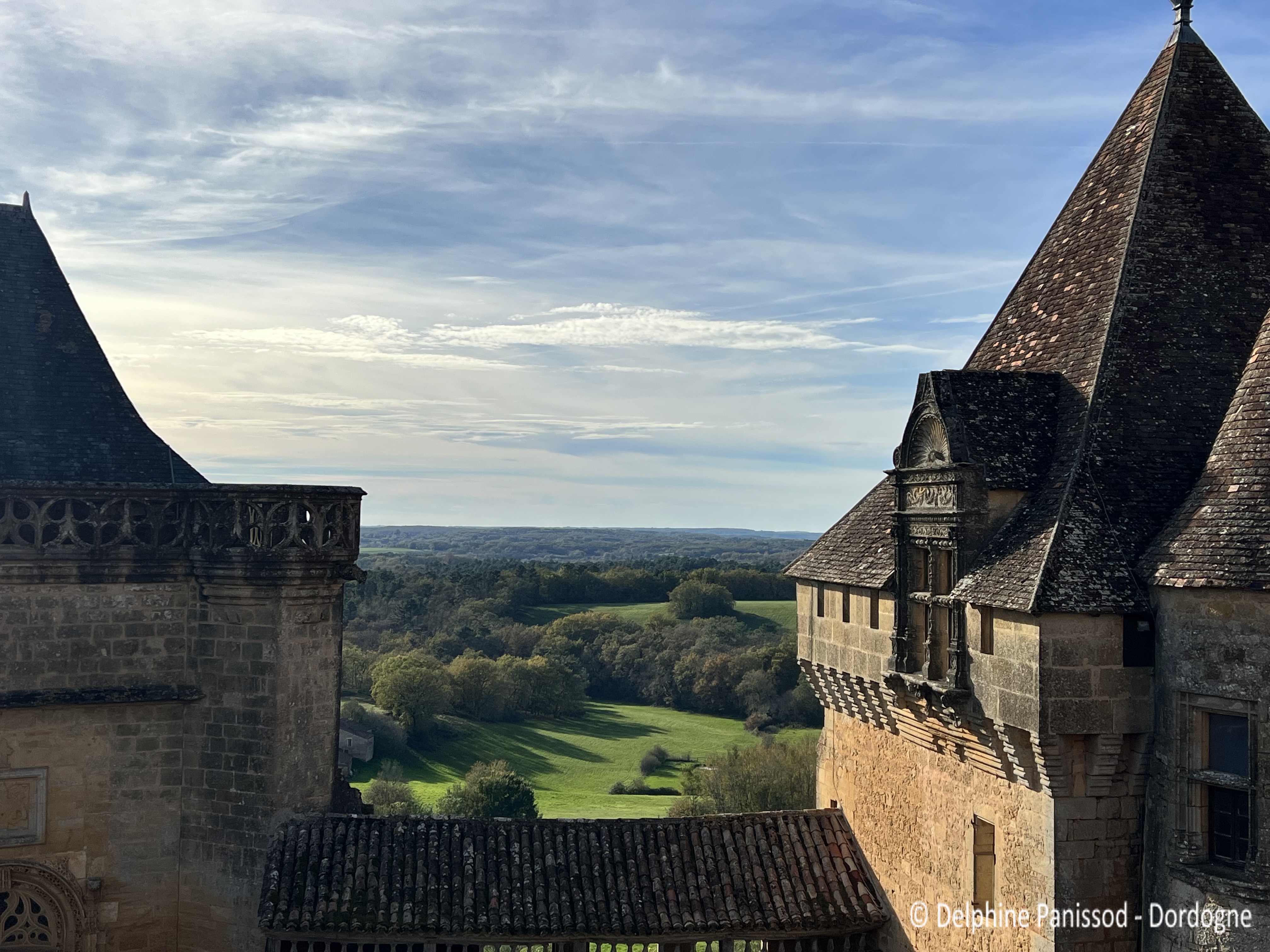
Renaissance architecture and sweeping Périgord countryside at Château de Biron – © Delphine Panissod
Château de Biron is certainly worth visiting in its own right, but its location also makes it a perfect stop during a day exploring the southern Périgord.
The beautiful bastide of Monpazier, officially listed among Les Plus Beaux Villages de France, is only a few kilometres away.
And this is exactly what I love about this corner of the Dordogne.
Within just a few kilometres, you can go from a monumental château to a medieval bastide, then find yourself driving along tiny country roads through forests, meadows and villages built from honey-coloured stone.
Living in the Dordogne also means having all this on your doorstep
When I talk about the Dordogne with my property clients, particularly those moving here from another part of France or from abroad, I obviously talk about houses, villages and quality of life.
But living here also means being able to wake up one morning and decide to visit somewhere like Biron.
Driving through the countryside, spotting that enormous silhouette in the distance, spending a few hours exploring almost a thousand years of architecture… and perhaps stopping for a coffee in a nearby bastide afterwards.
For me, that's another way of understanding what makes the Périgord and the Dordogne such a special place to live.
Château de Biron is now owned by the Dordogne Department, which acquired it in 1978 and has since undertaken extensive restoration and conservation work. The château also hosts exhibitions and cultural events throughout the year.
If you love historic architecture, old stone buildings and spectacular countryside, Château de Biron deserves a place on your Dordogne itinerary.
As for me, I'd happily go back again… perhaps in a different season, just to see how the changing light transforms this magnificent stone giant once more.
Chateau de Biron official website
Read my other blogs about castels :
Villages and bastides :